
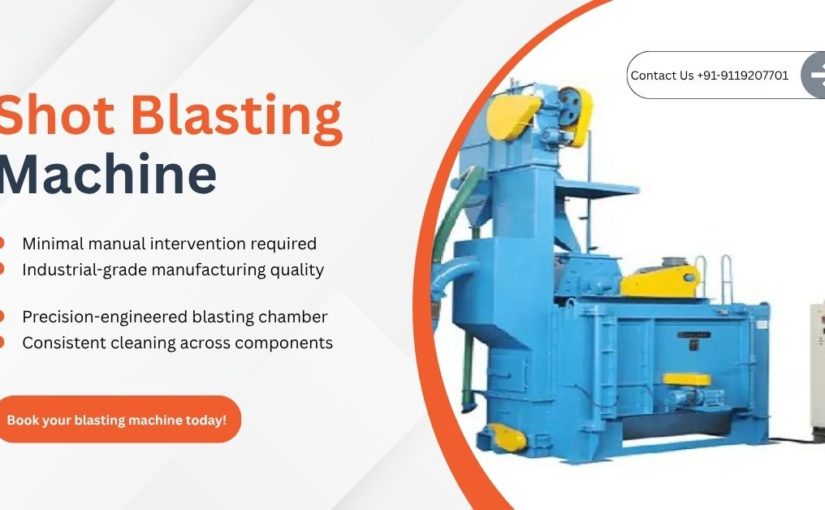
Discover how engineering colleges in India are contributing to shot blasting machine research and development in 2026. Learn how academia and industry collaboration is driving innovation, automation, and skilled workforce development.
Engineering Campuses Are Quietly Powering the Next Generation of Shot Blasting Technology
India’s manufacturing sector is evolving rapidly, and the shot blasting machine industry is evolving with it. While manufacturers continue investing in automation and advanced surface preparation systems, engineering colleges are emerging as valuable partners in research and development (R&D). Their contribution is helping industries improve machine efficiency, reduce operational costs, and prepare skilled professionals for the future.
In 2026, collaboration between academia and industry is becoming more important than ever. Engineering institutions are supporting innovation through research projects, laboratory testing, student internships, and prototype development that directly benefit industrial equipment manufacturers.
“Innovation becomes sustainable when industry experience meets academic research. Engineering colleges are helping manufacturers transform practical challenges into smarter engineering solutions.” — Airo Shot Blast
Why R&D Matters in the Shot Blasting Industry
Shot blasting machines play an essential role in cleaning, strengthening, and preparing metal surfaces before painting, coating, welding, or fabrication. Industries such as steel, automotive, railway, aerospace, construction equipment, foundries, and renewable energy depend on reliable surface preparation for quality production.
As customer expectations continue to rise, manufacturers are focusing on developing machines that offer:
- Higher productivity
- Lower energy consumption
- Better abrasive recovery
- Improved dust collection
- Reduced maintenance
- Digital monitoring
- Greater automation
Research and development help manufacturers achieve these goals while remaining competitive in domestic and export markets.
Engineering Colleges Are Becoming Innovation Partners
Across India, engineering colleges are encouraging students and faculty members to work on industrial challenges through practical research.
Many institutions collaborate with manufacturing companies on projects involving:
Automation and Smart Manufacturing
Students develop automation concepts using sensors, programmable logic controllers (PLCs), and Industrial Internet of Things (IIoT) technologies to improve machine performance and operational efficiency.
Material Research
Researchers study wear-resistant materials for blast wheels, liners, and machine components to increase equipment life and reduce maintenance costs.
Energy Efficiency
Engineering teams analyze motor performance, airflow systems, and abrasive circulation to identify opportunities for lowering power consumption without affecting productivity.
Environmental Improvements
Research also focuses on improving dust collection systems, noise reduction, and waste management to create cleaner and safer industrial environments.
Also Check – https://airoshotblastindia.bcz.com/2026/04/14/shot-blasting-machines-for-bright-bar-finish-perfection/
Benefits for Manufacturers and Students
Industry-academia partnerships create value for both sides.
Manufacturers gain access to fresh engineering ideas, technical expertise, and research facilities without handling every development project internally. Student projects often introduce innovative approaches that can later be refined for commercial use.
Engineering students benefit by working on real industrial problems rather than only theoretical concepts. They gain practical knowledge, understand manufacturing processes, and improve their employability through internships and live industry projects.
This collaboration helps bridge the gap between classroom learning and industrial requirements.
Supporting India’s Manufacturing Vision
India’s focus on strengthening domestic manufacturing has increased the importance of innovation-led industrial growth. Engineering colleges contribute by producing skilled engineers who understand modern manufacturing technologies, automation systems, and quality standards.
As industries adopt advanced production methods, research partnerships can help accelerate:
- Machine modernization
- Digital manufacturing
- Sustainable engineering practices
- Product quality improvements
- Export competitiveness
- Indigenous technology development
These efforts support long-term industrial growth while encouraging innovation within the country’s engineering ecosystem.
Future Outlook
Industry experts believe that the future of shot blasting technology will depend on continuous innovation rather than incremental improvements alone. Artificial intelligence, predictive maintenance, smart sensors, robotics, and digital process monitoring are expected to influence the next generation of machines.
Engineering colleges will continue playing an important role by providing research support, developing prototypes, and preparing engineers capable of meeting the changing needs of Indian manufacturing.
As collaboration between educational institutions and manufacturers grows stronger, the shot blasting industry is likely to see faster technological advancement and greater global competitiveness.
Conclusion
The role of engineering colleges in India’s shot blasting machine industry extends far beyond education. Through research, innovation, prototype development, and industry collaboration, these institutions are helping manufacturers build smarter, more efficient, and environmentally responsible equipment.
In 2026, successful manufacturing is increasingly driven by knowledge-sharing between industry professionals and academic researchers. Companies that actively engage with engineering institutions today are likely to be better positioned for tomorrow’s technological challenges.
If your manufacturing business is planning to upgrade its shot blasting technology, consider collaborating with engineering institutions for research, product testing, and innovation. Strong industry-academia partnerships can lead to practical solutions, improved product performance, and long-term business growth.